When to Reseal Your Stone or Concrete Surface in Houston
Texas Stone Sealers explains how homeowners can know when to reseal your stone or concrete and why timing affects longevity, appearance, and long term cost.
Stone looks tough. Concrete looks even tougher. Both surfaces feel solid under your feet, and both appear strong enough to last forever. But the truth is simple. Stone and concrete begin to break down long before most people notice. Water enters the pores. Stains settle. Sun fades the color. Small cracks form. Over time, the surface weakens. What once looked clean and sharp starts to lose its edge.
This process happens slowly. A little weather. A little moisture. A little wear. By the time a homeowner sees the damage, the surface is already past the point where cleaning alone can fix it. Resealing prevents this. It protects the material before the damage takes hold. The key is knowing when to reseal.
Surfaces Do Not Fail All at Once
Stone and concrete rarely collapse overnight. Their decline begins inside the pores where water, minerals, chlorine, salt, and soil settle. Once inside, they push outward. They weaken the bond between layers. They fade the color. They create a rough and uneven look.
Resealing stops this process. It blocks water. It slows erosion. It protects against stains. But sealing is not permanent. Weather breaks it down. Traffic wears it away. Chemicals dissolve it slowly. Homeowners often ask how long a sealer lasts. The answer depends on climate, surface type, and the quality of the sealer.
In Houston, conditions are tough. Heat. Humidity. Rain. UV exposure. Pool chemicals. All of these stress the surface and shorten the life of any sealer. This makes regular resealing more important here than in many other regions.
How Long Sealers Typically Last
Most high quality penetrating sealers last two to five years. Some last longer on dense stone. Some wear faster on soft stone. Pool decks wear down a little faster because of chlorine, foot traffic, and constant moisture. Driveways sometimes last longer because they face less moisture but more heat.
Topical sealers break down faster because they sit on the surface and face direct wear. A penetrating sealer, especially one designed for harsh climates, usually gives stronger performance. At Texas Stone Sealers, we use TSS Pro Sealants because they penetrate deeply and hold up in Houston’s environment.
The timeline is not the same for every home. It varies. This is why homeowners need simple ways to test whether their stone or concrete needs attention.
Reseal Your Stone? The Water Test
The easiest way to know if you should reseal your stone is the water test. Pour a small amount of water on the surface. Watch how the stone reacts.
If the water beads up, the sealer is still active.
If the water spreads out or absorbs quickly, the protection has weakened.
If the stone darkens within seconds, the surface needs resealing soon.
This test takes less than a minute. It gives a clear sign without guessing. Homeowners should check their surfaces every few months, especially around spring and summer when weather changes.
Visual Signs You Need to Reseal Your Stone
Sometimes the surface tells the story before you test it. These are the signs most homeowners notice.
Color fading
Darkened spots
White powdery buildup
Rough or chalky texture
Water soaking in instead of beading
Higher slipperiness around pools
Stains that do not wash off
Growth of algae or mildew
Loose or crumbling stone edges
Concrete developing small cracks
Each of these signals means the stone or concrete has lost its protection. You should reseal your stone. Without resealing, the damage accelerates. It becomes harder to clean. It becomes more expensive to repair.
Houston Weather Speeds Up Wear
Houston’s climate is not gentle on stone. Heat opens the pores. Rain fills them. Moisture lingers in shaded areas. Humidity encourages algae growth. UV rays lighten the color and weaken the surface. Pool decks face chlorine and saltwater. All of this works together to break down sealers faster.
Some cities have predictable seasons. Houston has long stretches of humidity, sunlight, and storms. This constant cycle stresses stone and concrete surfaces. It also means homeowners should plan to reseal more frequently than people who live in dry or cool climates.

Why Timing Matters When You Reseal Your Stone
Resealing too late can be costly. Once water enters the stone, it begins to break down the material from the inside. At that point, sealing alone cannot reverse the damage. The stone must be cleaned, restored, or in some cases resurfaced before sealing again.
Resealing on time keeps the stone intact. It prevents the early stages of damage. It makes cleaning easier. It preserves color. It reduces the need for expensive repairs. The process is quicker and costs less when the surface is still in good shape.
Texas Stone Sealers often helps homeowners who learned this the hard way. They waited too long. The stone changed color. The concrete cracked. The patio began to erode. The repairs were far more expensive than routine resealing.
When Pool Decks Need Resealing
Pool decks face constant stress. Water splashes. Chlorine dries on the surface. Sunscreen drips onto the stone. Calcium deposits leave white marks. Heat and moisture trade places throughout the day. This makes pool decks some of the most demanding surfaces to protect.
Most pool decks in Houston need resealing every one to two years. Some last longer with strong penetrating sealers like TSS Pro. Some require more frequent care depending on use. The water test and visual signs are the best way to measure need.
When You Need To Reseal Your Stone Patios
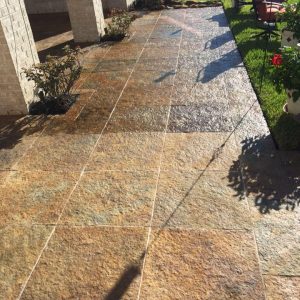
Patios take on a wide mix of conditions. Sun. Rain. Foot traffic. Grilling. Spills. Dirt. They typically need resealing every two to three years. Flagstone patios often need resealing sooner because they absorb water easily. Paver patios may last longer depending on the product used.
A clean patio looks inviting. A sealed patio stays cleaner longer. Dirt, pollen, and spills wipe away with less effort.
When Driveways Need Resealing
Driveways face heat and traffic. They face oil and tire marks. They face sun exposure all day. Concrete and pavers can last three to five years with the right sealer. Oil stains are a key concern on driveways, and penetrating sealers do a good job preventing deep absorption.
When driveway sealer wears down, stains set in quickly. Keeping the surface sealed prevents costly cleaning and resurfacing.
The Science Behind Resealing
Penetrating sealers use silane and siloxane based chemistry. These compounds enter the pores of stone and concrete. Once inside, they bond with minerals and form a protective barrier. This barrier blocks water and stains but still allows the stone to breathe.
This principle appears in stone conservation research, including information found at https://en.wikipedia.org/wiki/Stone_conservation.
The science is simple. The protection works because it forms from the inside out.
Why Professional Resealing Makes the Difference
Store bought sealers often fail because they sit on the surface. They do not penetrate enough. They break down quickly. They do not match the stone’s needs. They cannot handle Houston weather. Professional grade penetrating sealers solve these problems.
At Texas Stone Sealers, we use TSS Pro Sealants because they work on limestone, sandstone, slate, flagstone, concrete, pavers, and pool surfaces. These sealers last longer, resist more pressure, and handle the heat and humidity of the Gulf Coast.
To learn more about our products and services, visit https://texasstonesealers.com/tss-pro-sealants/.
Takeaway
Resealing is not optional in Houston. It is essential. Stone and concrete break down under heat, rain, chemicals, and wear. Homeowners who reseal on time protect their patios, pool decks, and driveways. They save money. They avoid repairs. They keep their outdoor spaces strong and clean.
The right time to reseal is when water stops beading, when color fades, when stains appear, or when the surface begins to absorb moisture. Texas Stone Sealers helps homeowners identify these signs and apply the right TSS Pro Sealant for long lasting protection. If your surface is showing early wear or if it has been more than a couple of years since its last treatment, now is the time for you to reseal your stone.


