How to Tell if Your Stone or Concrete Surface Needs to Be Resealed
Your stone or concrete surface needs to be resealed when it stops looking protected, starts taking in water more easily, stains faster, and becomes harder to keep clean.
That is the simple answer.
But we know most homeowners do not call us because they already know that. They call because something feels off. The patio looks duller. The pool coping does not clean up like it used to. The driveway seems to stain faster. The concrete feels more exposed. They can tell the surface has changed. They just are not sure what the change means.
We deal with that question all the time.
In fact, we recently published blog content around resealing because it is one of the most common long-term maintenance questions property owners ask us.
And it is a good question.
Because sealing is not forever.
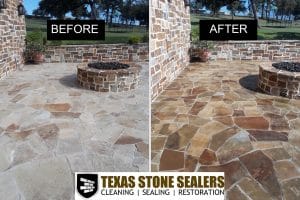
If you need an affordable cleaning and sealing service, contact Texas Stone Sealers!
We usually notice the visual change to the stone first
This is how most surfaces start talking.
They look tired.
Not broken. Not destroyed. Just tired.
The color feels flatter. The finish looks dry. The stone or concrete no longer has that cleaner, more complete look it had when the last sealing job was still doing its work. We frame sealing as a way to preserve the beauty of natural stone, pool coping, patios, driveways, and pavers in Texas weather.
So when that preserved look starts fading, we pay attention.
That is usually one of the first clues that resealing time is getting close.
We also watch how water behaves on the surface
This is one of the best field tests we know.
If water used to bead or sit differently and now seems to soak in faster, that tells us something. A lot of our service language is built around helping protect porous surfaces from repeated moisture absorption.
That is the point of sealing.
So when water behavior changes, it is not a small detail. It is one of the clearer signs that the protective barrier is fading.
We know fading protection usually shows up in cleanup too
A surface that used to rinse off easily suddenly starts hanging on to dirt, residue, and stains. Leaves leave marks. Spills linger. General grime becomes harder to remove. When that happens, homeowners usually feel like the surface has become high-maintenance for no good reason.
Usually there is a reason.
The protection is not doing what it used to do.
That is exactly why our maintenance process includes chemical cleansing, stain removal, mold and mildew removal, and prep before resealing. Neglected surfaces often come in carrying much more contamination than owners expect.
That is what weak protection looks like in real life.
We pay close attention to white buildup and surface residue
White haze gets attention fast.
So do calcium deposits, mineral film, and recurring buildup that seems to come back no matter how often the owner cleans. We have dedicated pages for calcium and efflorescence removal because those are common problems on outdoor stone, pavers, coping, and concrete.
When we see that kind of buildup, we do not just look at the residue itself.
We also ask what the surface is telling us about its overall protection.
Because moisture-related deposits usually show up faster on surfaces like concrete and stone that are underprotected or overdue for resealing.
We know some surfaces need closer attention than others when resealed
Not every surface ages the same way.
Pool coping, for example, lives a hard life. It deals with chlorine, saltwater, splashout, cleaning, UV, and repeated wet-dry cycles. We say plainly on our site that pool coping takes a relentless beating and that keeping it protected matters because replacement is expensive.
Pavers can be the same story.
Concrete can hide the problem until it gets more obvious.
Natural stone patios and walkways can drift downhill slowly enough that owners do not notice until a lot of protection is already gone.
That is why we do not ask only, “How long has it been?”
We also ask, “What kind of surface is this, and what has it been going through?”
We always factor in Texas weather
This part matters more than people think.
A homeowner in a milder climate may get away with waiting longer between services. Texas surfaces often do not get that luxury. We repeatedly connect sealing and resealing needs to the state’s heat, rain, humidity, and heavy outdoor exposure.
So when someone asks us, “Can I wait another year?” our honest answer is often, “Maybe, but the surface may already be telling us not to.”
We believe resealing is usually the cheaper move than letting the surface slide
This is the practical bottom line.
A well-maintained surface is usually easier to keep looking good. A neglected one often needs deeper cleaning, stripping, stain treatment, mineral removal, mold treatment, and then sealing. Our published process makes that difference pretty clear.
That is why we do not see resealing as busywork.
We see it as preventive maintenance.
It is usually the cheaper path.

Ensure your pavers stand the test of time by calling our sealing experts today.
We would tell homeowners to ask themselves these questions
If you are trying to decide whether your surface is due, we would tell you to ask:
- Does it look duller than it used to?
- Is water soaking in faster?
- Are stains hanging on longer?
- Is it harder to clean?
- Are white deposits or mildew showing up?
- Has the surface been through heavy Texas weather, pool exposure, or steady outdoor use?
- Does it simply look like the protection is gone?
If the answer to several of those is yes, resealing may already be due.
For homeowners looking at next steps, we would point them to our our process, pool coping cleaning and sealing, and paver stone cleaning and sealing pages.
Takeaway
Your stone or concrete surface needs to be resealed when we can see that it has stopped looking protected, started taking in water more easily, and become harder to keep clean. Those signs usually show up before major damage does. If we catch them early, resealing is usually simpler and more affordable. If the surface gets too far behind, the job often turns into restoration first and protection second. That is why learning to spot when your stone or concrete surface needs to be resealed can save money and help keep the surface looking the way it should.


